Learn English words through play
A vocabulary game for children ages 3–7.
21 themed categories, native English pronunciation, no ads, no tracking.


What your child learns
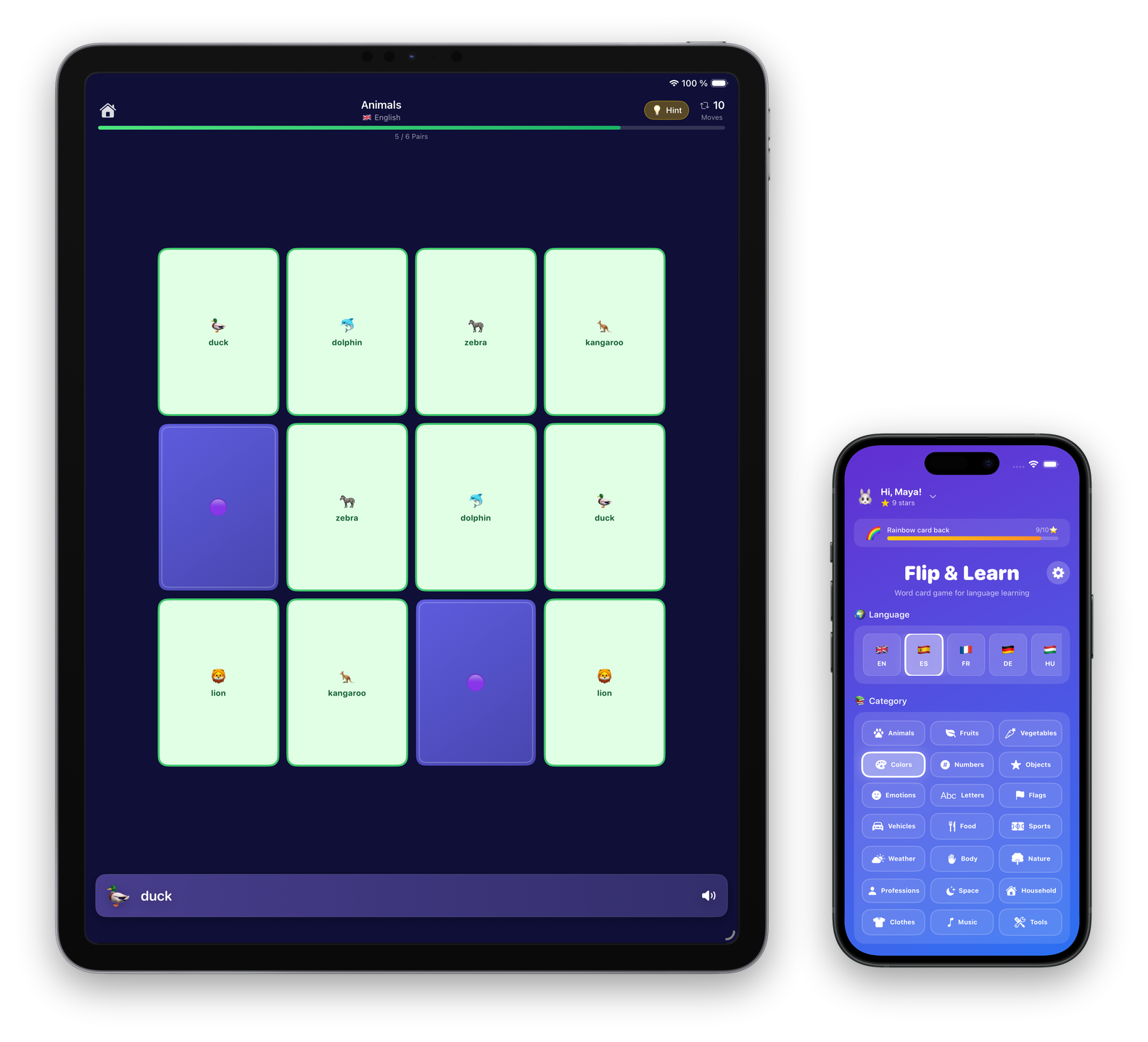
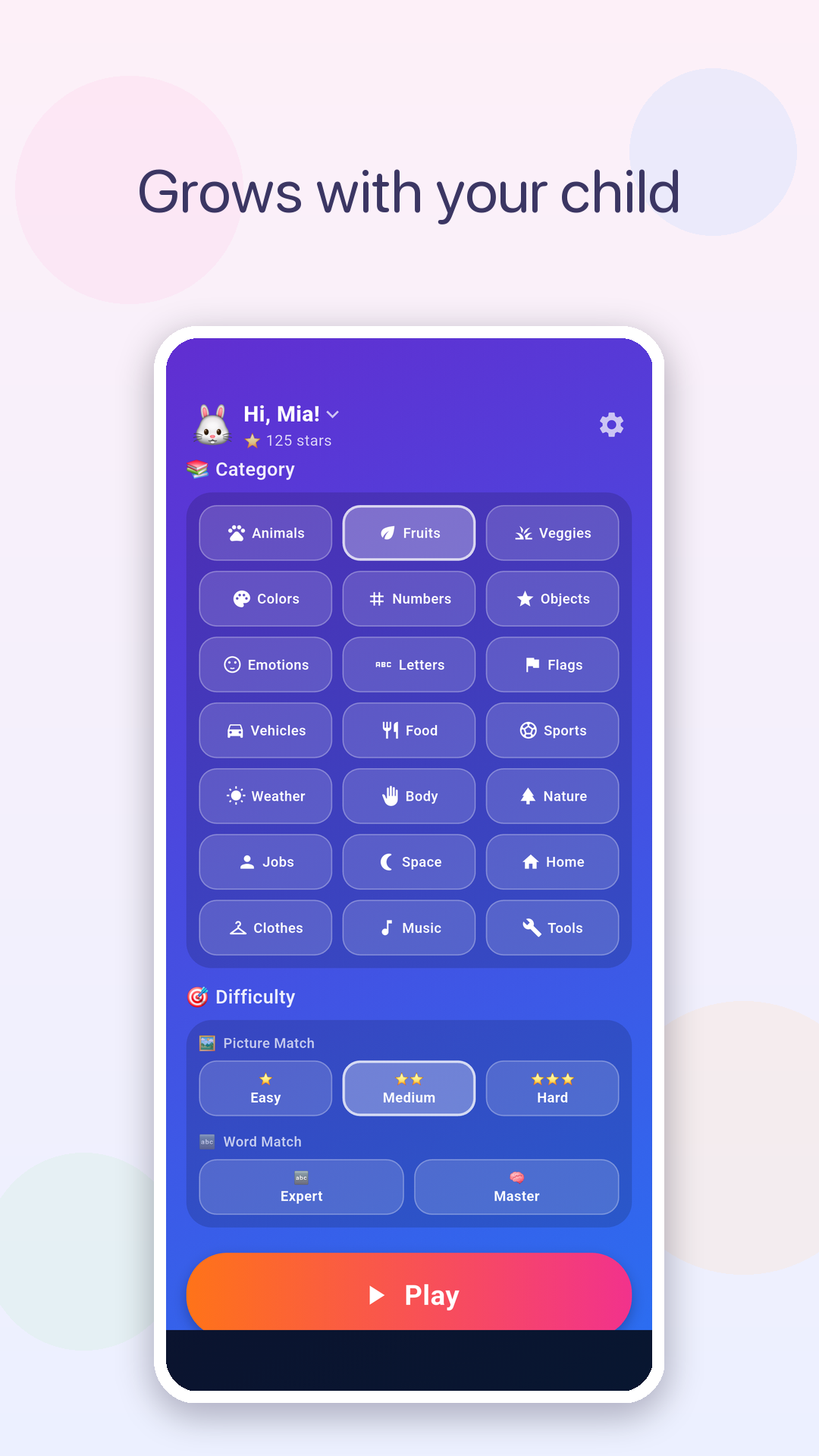
21 themed categories with 360 English words in total, each paired with an illustration and native pronunciation.
Animals
dog, cat, frog, bear, lion, elephant
Fruits
apple, banana, strawberry, orange, grapes, watermelon
Vegetables
carrot, broccoli, potato, corn, cucumber, tomato
Colors
red, blue, green, yellow, orange, purple
Numbers
zero, one, two, three, four, five
Objects
star, moon, sun, rainbow, house, car
Emotions
happy, sad, surprised, angry, sleepy, funny
Letters
A, B, C, D, E, F
Flags
United States, United Kingdom, France, Germany, Spain, Italy
Vehicles
car, taxi, bus, trolleybus, racing car, police car
Food & Drinks
pizza, burger, fries, taco, noodles, sushi
Sports
football, basketball, american football, baseball, tennis, volleyball
Weather
sun, partly cloudy, cloudy, rain, storm, lightning
Body Parts
eye, ear, nose, mouth, tooth, tongue
Nature
cherry blossom, hibiscus, sunflower, rose, tulip, flower
Professions
doctor, teacher, chef, police, builder, firefighter
Space
earth, moon, sun, star, glowing star, shooting star
Household
sofa, bed, shower, bathtub, plant, mirror
Clothes
hat, top hat, helmet, dress, shirt, t-shirt
Music & Arts
guitar, piano, drums, trumpet, violin, banjo
Tools
hammer, screwdriver, wrench, gear, saw, bolt
How it works
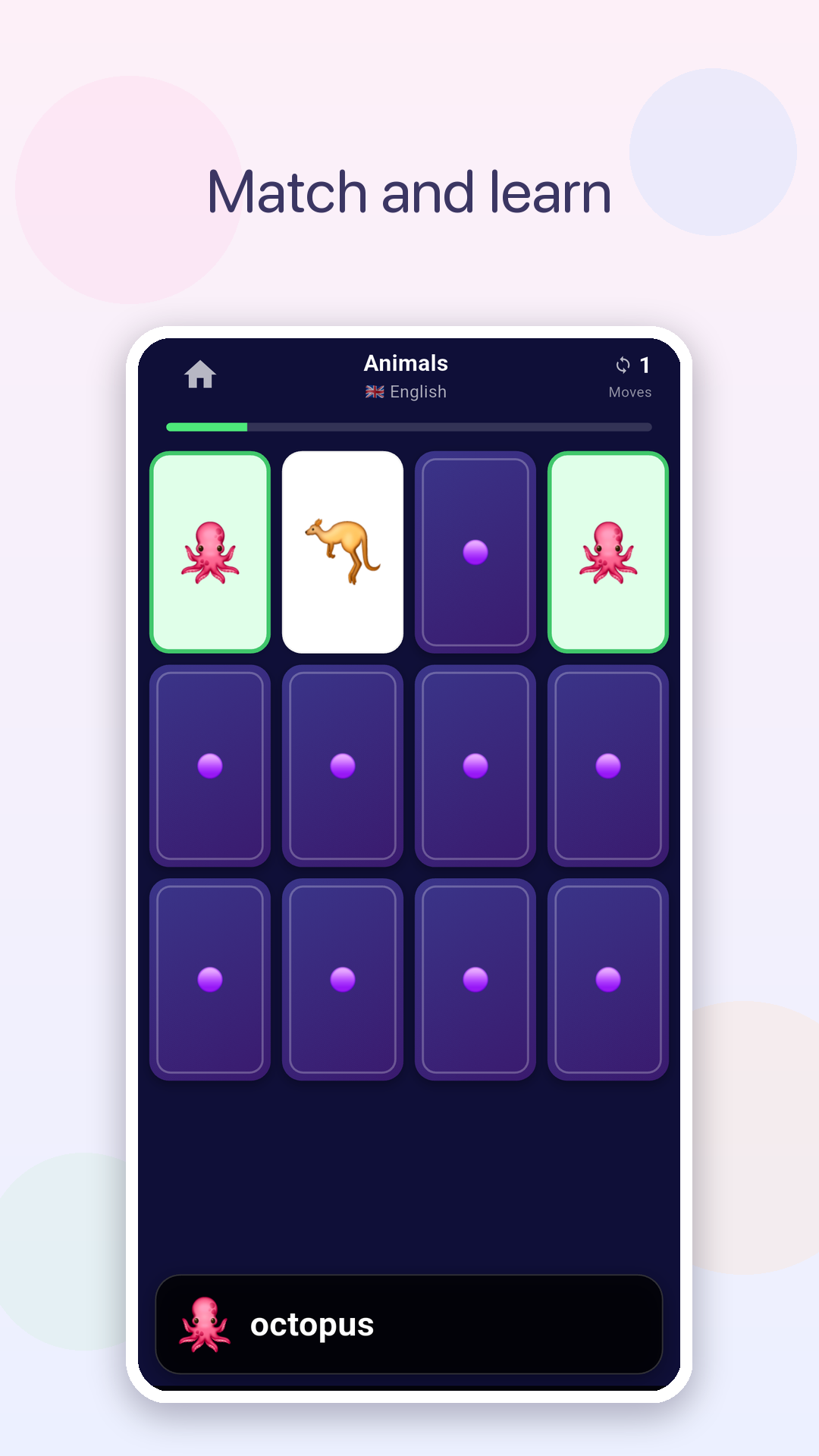
Flip a card
Tap a card to reveal an English word paired with a bright illustration.
Hear the word
Every card plays the native English pronunciation, so your child hears the word the moment they see it.
Match the pairs
Find both halves of each pair to complete the set — the memory game format young children already understand.
See it in action
Why teach your child English early
Young children pick up new sounds and words far more easily than adults. Between ages 3 and 7 the brain is especially responsive to language input — regular, low-pressure exposure to English at this age lays the groundwork for confident use later, without formal lessons and without pressure.
For bilingual and multilingual families, a game like Flip & Learn adds a second (or third) language into daily routine in a form the child controls. A few minutes of card-matching before bedtime is passive immersion: high repetition, immediate audio, no worksheets. That is exactly how young children build vocabulary in a first language, and it works the same way in a second.
The goal isn't fluency in a preschool app — it's familiarity. Children who meet English words playfully at 4 start school already recognizing them.
Who Flip & Learn is for
- Parents introducing English as a second language. No prior English needed from the parent — the app teaches the words directly.
- Bilingual families who want the non-dominant language to get regular airtime in a form the child actually enjoys.
- Preschool teachers and daycare centers looking for a screen-time activity that has a clear educational purpose and no ads.
- Homeschoolers adding an English vocabulary component to early-years curriculum.
Frequently asked questions
Is Flip & Learn free?
What ages is it designed for?
How many English words does it teach?
Does it have ads or in-app tracking?
Does it work without internet?
Can I use it to teach other languages?
How is Flip & Learn different from other kids' learning apps?
Start learning English today
Free to download on iOS and Android. English included.
Questions? support@flipandlearn.app